


Key Points
- What benefits can you gain from expanding your product line
- How to know your brand is ready to grow
- What makes a successful line extension
- Common mistakes brands make when expanding
- The 5-step process for developing line extensions
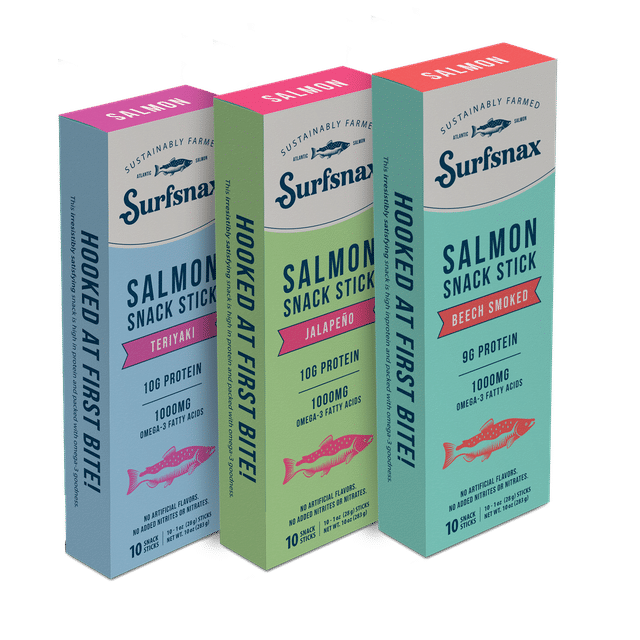
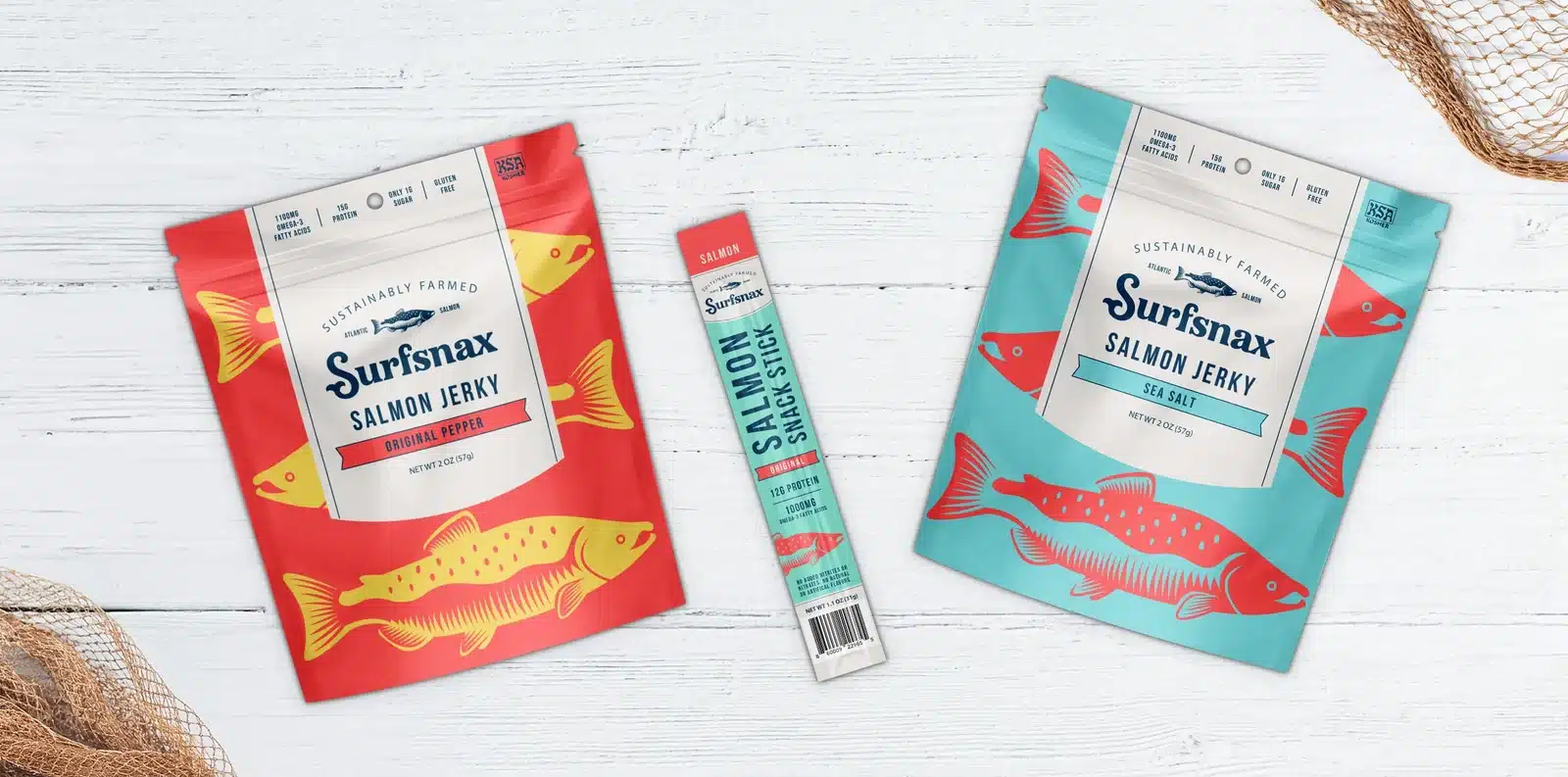
Surfsnax uses bold color differentiation to distinguish flavors while maintaining a cohesive brand identity across the product line.
Article Summary
You’ve launched a successful product. Now what? Many business owners are interested in expanding their brand or creating multiple product offerings. But doing so comes with concerns. How do you extend your product line without confusing your customers? How do you maintain your brand image across different products? How do you know that what sells for one product will work for another?
Whether you’re introducing a new flavor or fragrance or creating a new product within a wellness, food, or beauty line, you need a plan to keep your brand image cohesive and strategically drive long-term growth.
When Should You Expand Your Product Line?
Before you develop a strategy for a product line extension, you need to determine whether the choice is right for you, your brand, and your customers.
When done well, expanding a product line can be a great way to increase revenue and grow your brand. Not only can it increase your average order value, but it can help you simultaneously reach existing customers and appeal to potential new ones.
A strategic extension can be a great way to keep your business relevant and top of mind; launches often generate interest in your brand and can lead to a surge in sales.
A line extension can be especially effective at encouraging customer loyalty and repeat purchases, which is always a valuable strategy. After all, the probability of selling to someone who has already purchased something from you is between 60-70%, versus only 5-20% for new customers.
When you expand an existing product line, you can also streamline marketing costs and leverage existing relationships with retailers, potentially turning a greater profit faster than when you originally launched your product business.
However, a line extension isn’t right for every brand. You need to consider the following questions:
- Is your current product line profitable? Can it support you through the transition of creating a new offering?
- Is there a demand for a new product among your existing customer base?
- Will you be able to utilize the same manufacturers, packaging companies, co-packers, and other vendors to keep your time and financial investment reasonable?
- Does the extension make sense for your brand’s values and image?
If the answer to these questions is yes, then you are in the right place! You just want to make sure that your new line extension is done smartly and strategically.
Line Extensions vs. Brand Extensions
Not all new product offerings are the same, and some are lower-risk than others. A line extension is when a brand either offers a variation of an existing product or a comparable product within the same category.
For example:
- A food brand introducing a different flavor of a product
- An eyeshadow brand releasing a different palette
- A wellness company creating a new supplement product
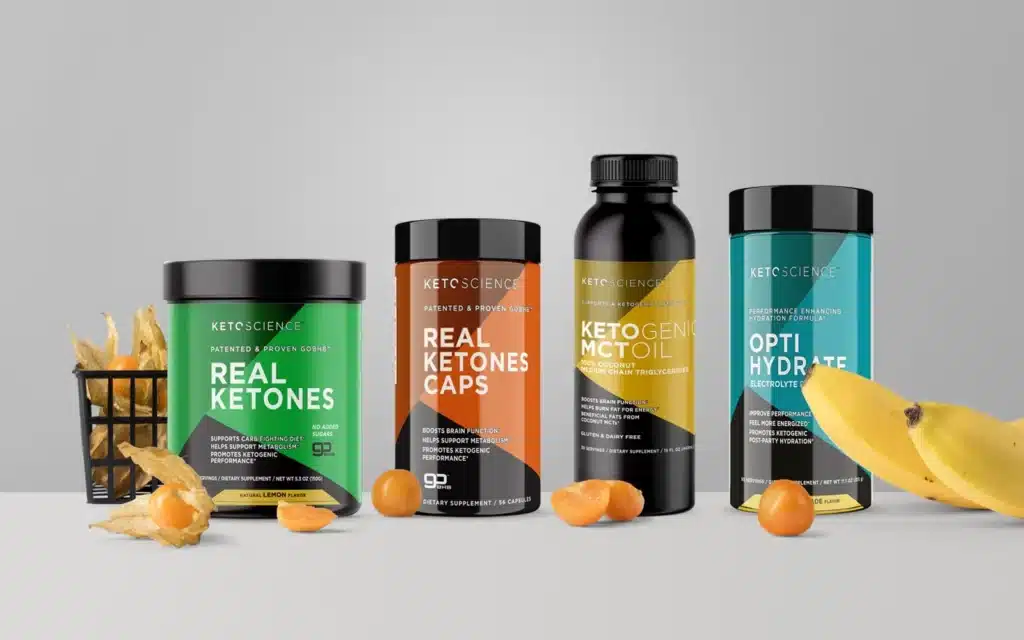
KetoScience offers supplements that target different consumer needs.
A brand extension, on the other hand, is when a brand creates a distinctly different (though usually still related) product line. Think of Apple expanding from computers into Smartphones, or Dove branching off from deodorant into body wash and soap. Brand extensions can be done successfully, but come with higher risk and more hurdles that you will need to navigate.
Product line extensions, however, offer the advantage of using your existing brand strategy and likely a similar production process. They are often cost-effective and less likely to confuse customers.
However, line extensions still need to be well-planned and thoughtfully developed. If you introduce a product that isn’t successful, you run the risk of alienating your existing customer base and damaging your brand reputation.
In this guide, we’ll be focusing on how to create smart line extensions that reinforce your brand and strengthen your image rather than diluting it.
What Makes a Successful Line Extension?
There is a reason there are so many clichés like “don’t reinvent the wheel” or “if it ain’t broken, don’t fix it.” If your product line is doing well, the last thing you want to do is create unnecessary complications or lead your brand astray.
At the same time, if you are going to introduce a new product, you need to make sure that you are being crystal clear with your customers about why the new offering is different.
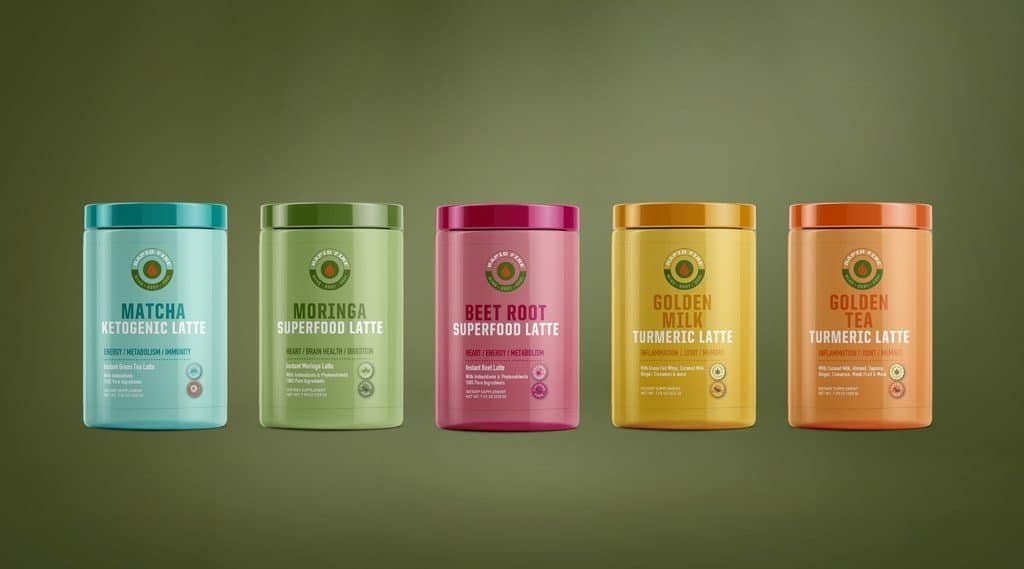
Your golden rule should be “distinct but cohesive.” In other words, consumers should be able to easily distinguish between your products without confusion while immediately recognizing your brand. This creates a fine, but important, line to walk.
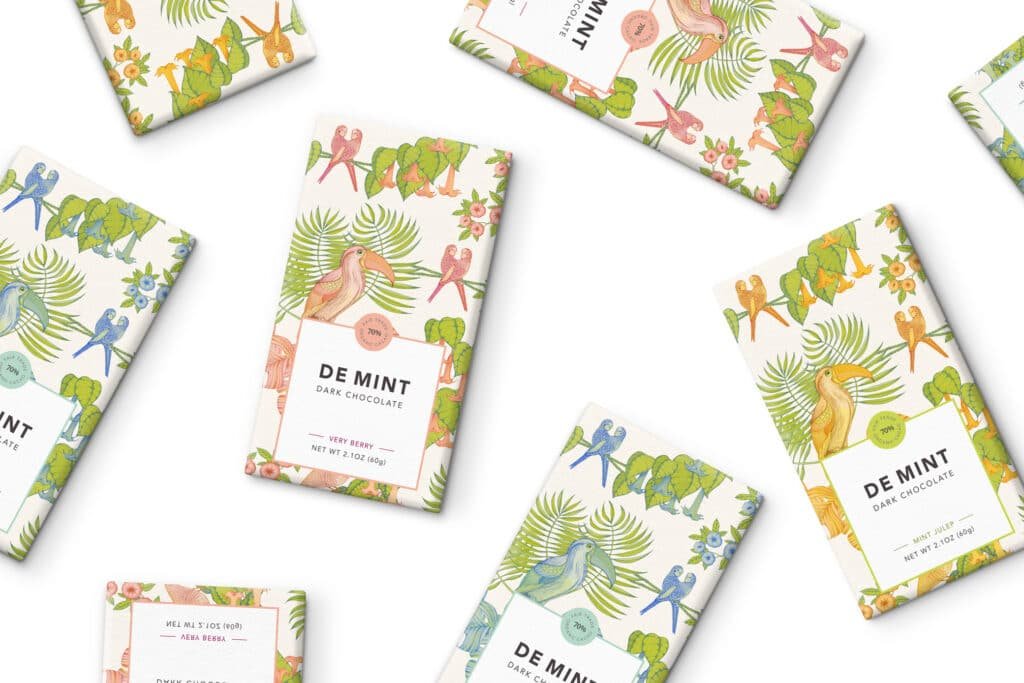
Think about your overall brand image. Your logo, typography, color palette, packaging structure, messaging, and overall aesthetic should work together to create familiarity.
From there, you can set the packaging design of each product apart by using techniques such as:
- Color coding (using different colors for distinct product variations)
- Product naming conventions
- Ingredient highlights
- Flavor imagery
- Benefit-focused messaging
You might use any of these options, or a combination of multiple, depending on your industry and your product type.
As you look through the following examples of product line extensions, notice the different ways these brands strike that “distinct but cohesive” balance, maintaining visual connection across the line while communicating the differences between products.
Flavor Extension
Food and beverage brands often start with a hero product and gradually introduce new flavors as demand grows. They often highlight flavor or ingredient differences through color coding, imagery, and product naming conventions. This makes it easy for customers to shop for distinct flavors quickly.
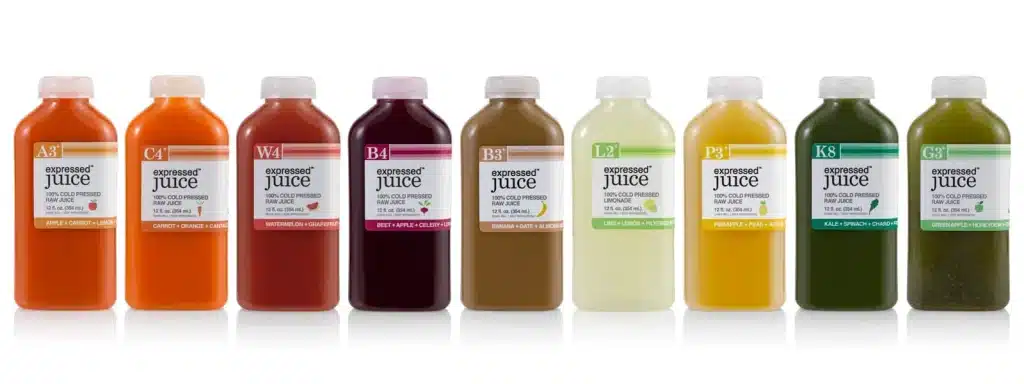
For Expressed Juice, each flavor has a distinct color and a corresponding fruit image. As a beverage brand, clear packaging allows the product itself to contribute to the color coding system as well. The layout, size, and structure of the label remain the same across each product, clearly connecting the brand.
Fragrance or Color Extensions
Similar techniques are often used in the beauty industry when introducing new product variations, such as when a perfume line unveils a new fragrance, or a cosmetic brand creates a new color offering.
Color coding and naming conventions can distinguish different options while maintaining the product line’s overall aesthetic.
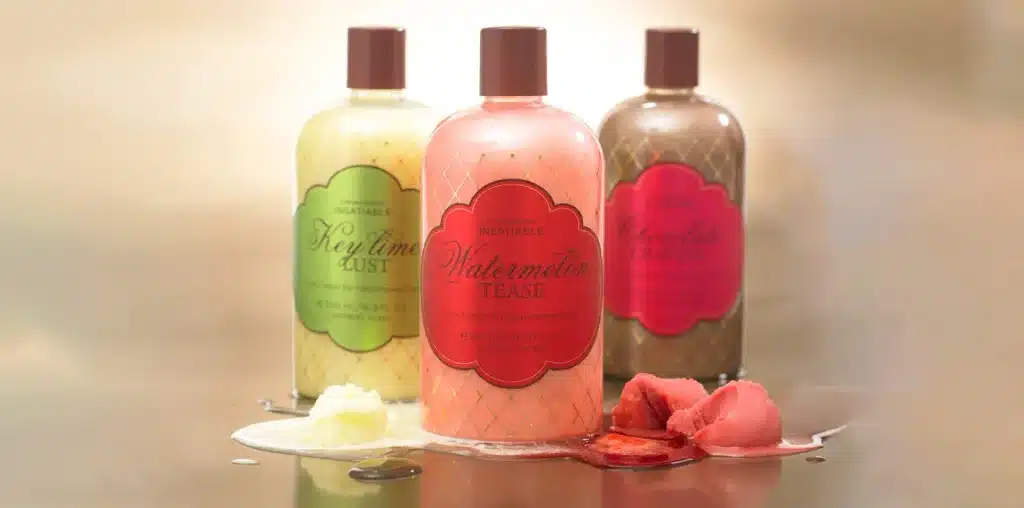
Insatiable by Victoria’s Secret uses color coding to separate fragrance options. The product names, Key Lime Lust, Watermelon Tease, and Chocolate Craving, align with the seductive, sensual feel of the brand while clearly communicating the differences.
Note that while the label colors are different, they each maintain the same saturation and metallic appearance. The fishnet lattice pattern also connects the products across variations.
Feature Variations
Sometimes, a product line extension is created to offer specific features, such as gluten-free or low-calorie variations of a food product, or a sensitive-skin specific formulation of a skincare product.
These extensions might appeal to a new niche audience, so it’s important that consumers can easily identify unique features. However, these options should still align with the brand essence and convey the same sense of quality.
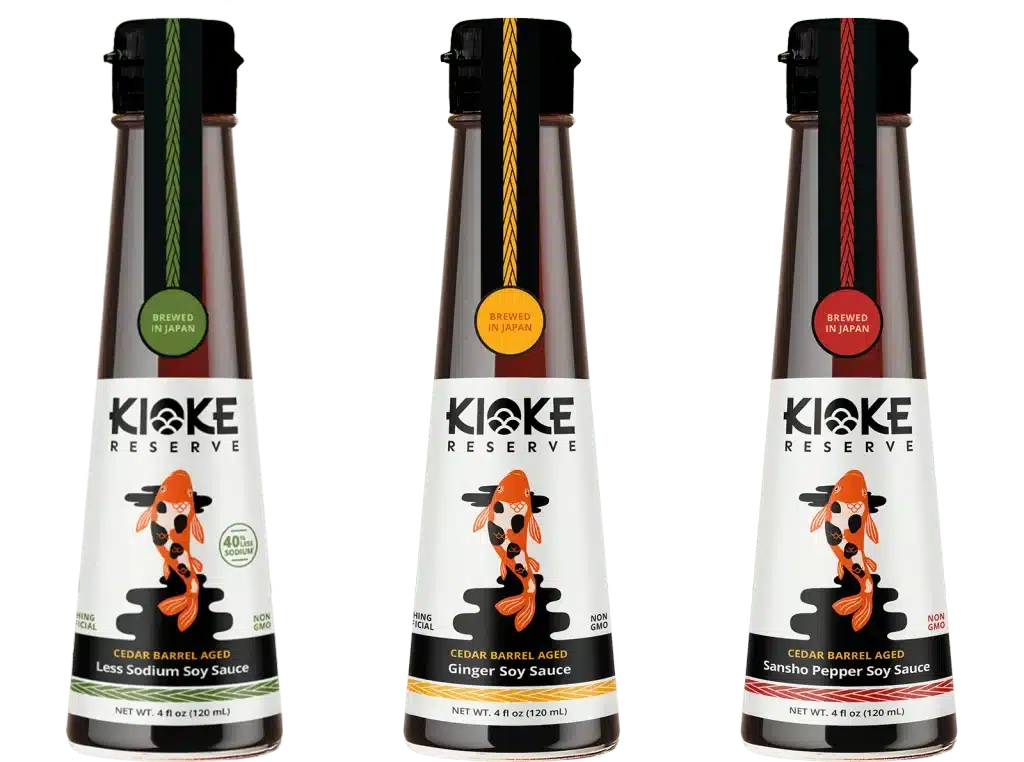
Kioke Reserve’s premium, artisanal feel is reflected across different flavors of their soy sauce, along with their lower sodium offering. White text on dark color blocking allows consumers to quickly understand the differences between products. The lower sodium product contains an additional icon with a call-out explaining it contains 40% less sodium.
This example shows that color coding or label variations can be subtle. Sometimes a consistent primary color structure with different accent colors is just as effective as a more direct color change.
Benefit-Based Extensions
Sometimes a line extension involves creating a different product within the same category rather than a variation of an existing product.
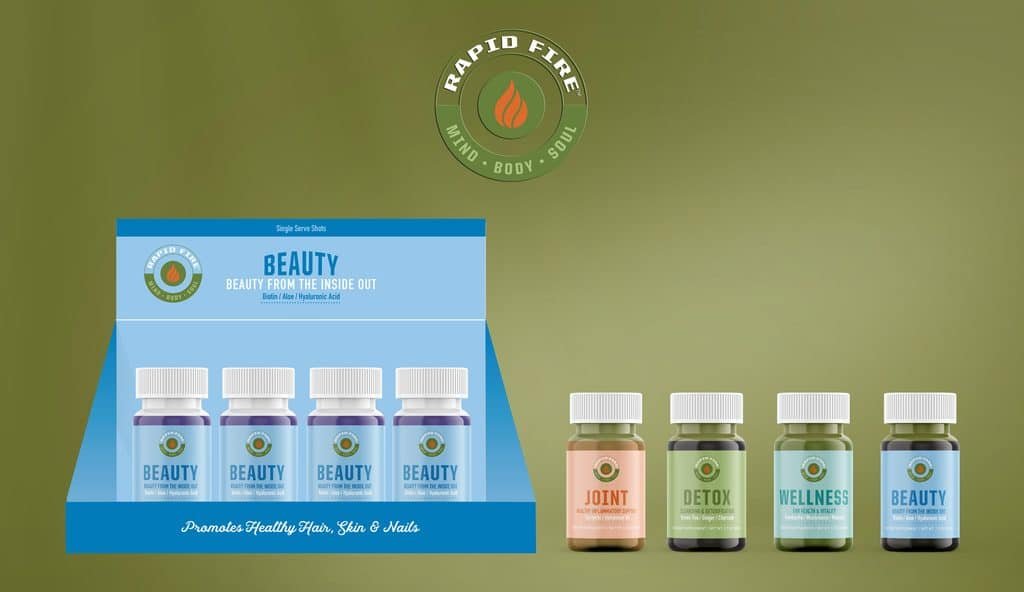
In the wellness industry, for example, you might want to extend your product line by creating additional supplements that offer different benefits or health solutions. This allows you to solve new problems for your existing customers, who might struggle with connected health concerns or want to approach their wellness holistically.
For example, a brand that offers energizing supplements might expand their line to create products that support sleep or promote a calm feeling.
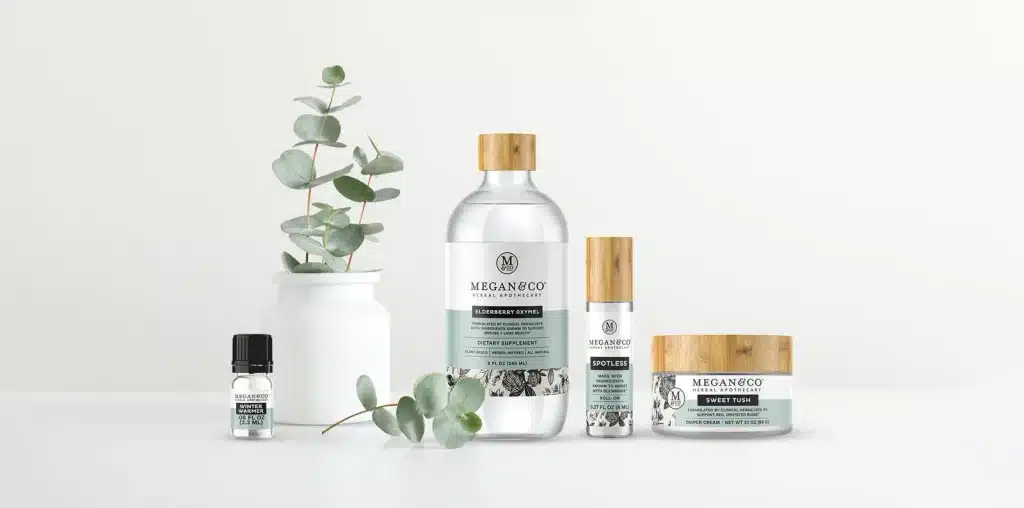
Megan & Co. Herbal Apothecary and Clinic offers several different wellness solutions for their customers, from immune support tonics to pain relief salves. Since the products come in different primary package shapes, the design elements such as color palette and illustrations remain consistent to reinforce the brand image across categories.
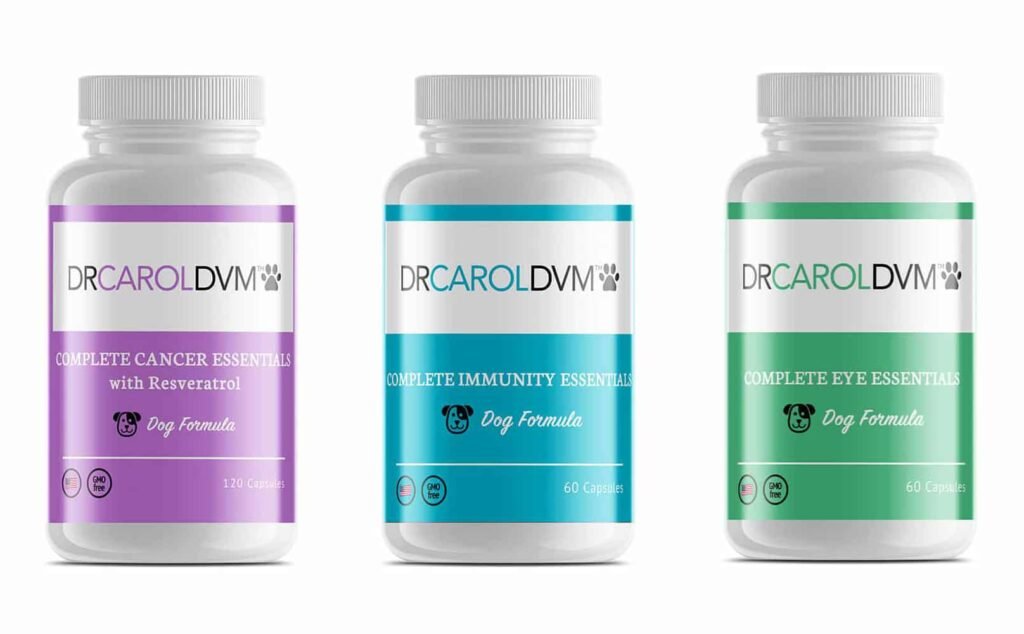
Pet supplement brand, Dr. Carol DVM, distinguishes different wellness products using color coding.
Companion Product Extensions
Another way to extend your product line is by offering companion products, or multiple products that work together.
For example, in the beauty industry, different bath or skincare products might contribute to consistent routines while offering individual features and benefits.

Truesse’s line of serums maintains a similar design across products, with color-coded accents setting each apart and identifying individual uses. This makes the products each stand on their own as distinct options, while also tying them together to indicate an ongoing skincare routine.

Avon’s Brazil Beat features the same color palette and imagery for the lotion, body spray, and perfume, indicating that the line is created to work together.
Common Mistakes to Avoid When Expanding Your Product Line
Not every line extension works—and you don’t want your growth plan to backfire and jeopardize your brand. The best case scenario when expanding is that you reinforce loyalty with existing customers and manage to appeal to new ones at the same time. But the worst case is hastily introducing a new product that leaves customers confused or disappointed.
Here are some common mistakes that we’ve seen brands make—and how to avoid them:
Mistake #1: Inconsistent Packaging
When brands haven’t planned ahead for growth and expansion or created foundational branding, they might end up creating products that aren’t cohesive.
This not only causes your brand to miss out on brand recognition, but it can also leave your customers confused.
When Earth’s Bounty came to us for a rebrand, they had several high-quality products, but the packaging did not connect them together:
Before

After
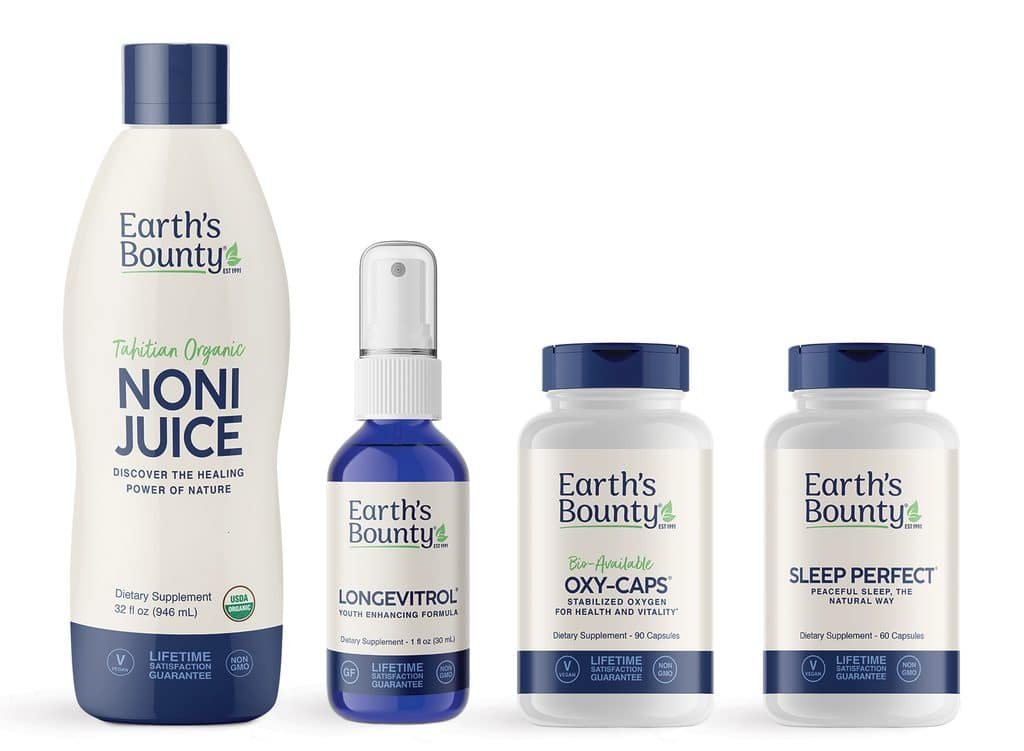
We designed consistent branding and packaging, ensuring that each product maintained a strong, easily-identifiable brand image.
If you’re a new brand starting out, the best way to avoid this mistake is to create foundational branding from the beginning. Establishing a consistent color palette, brand typography, and a brand voice upfront can lay out guidelines and help ensure that your products and even your communication or online presence all align.
And if you’ve already started expanding your brand and have misstepped with your packaging in the past, it’s important to get consistent as quickly as possible. If you continue expanding your line without cohesive branding, the problem will only become more difficult, and more expensive, to fix in the future!
Mistake #2: Expanding Too Quickly
It can be tempting to expand your product line for expansion’s sake. But this can cause you to rush too quickly. When this happens, you might end up with products, packaging, or branding that doesn’t reflect the quality or values of your brand.
Before Megan & Co. Herbal Apothecary and Clinic’s rebrand, the company grew the product line very quickly, introducing over 100 products within a short time. The packaging and branding suffered, conveying a lower quality that didn’t match the integrity of the products.
Before
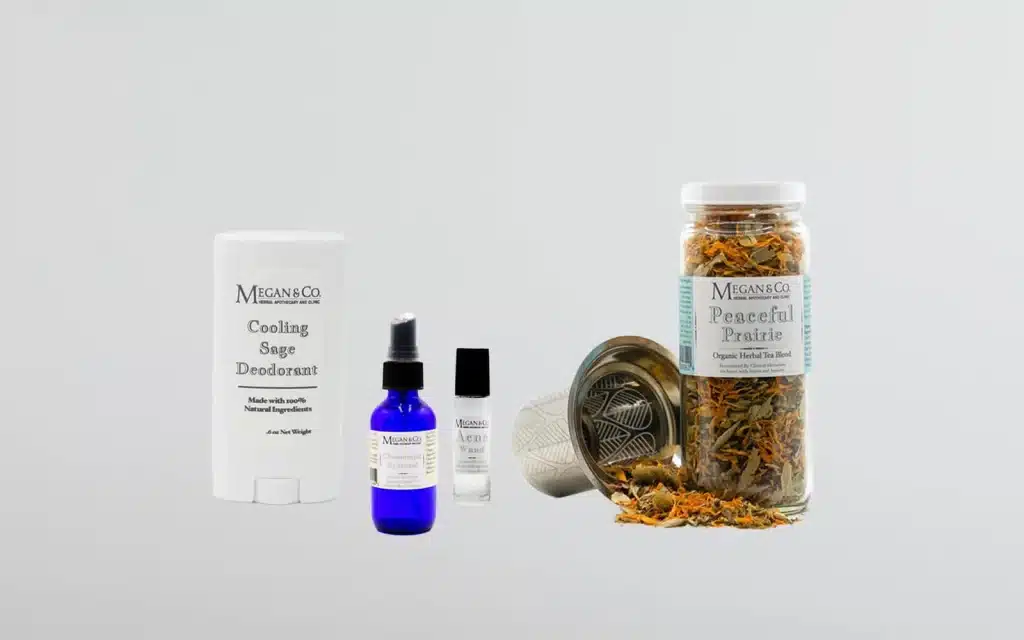
After
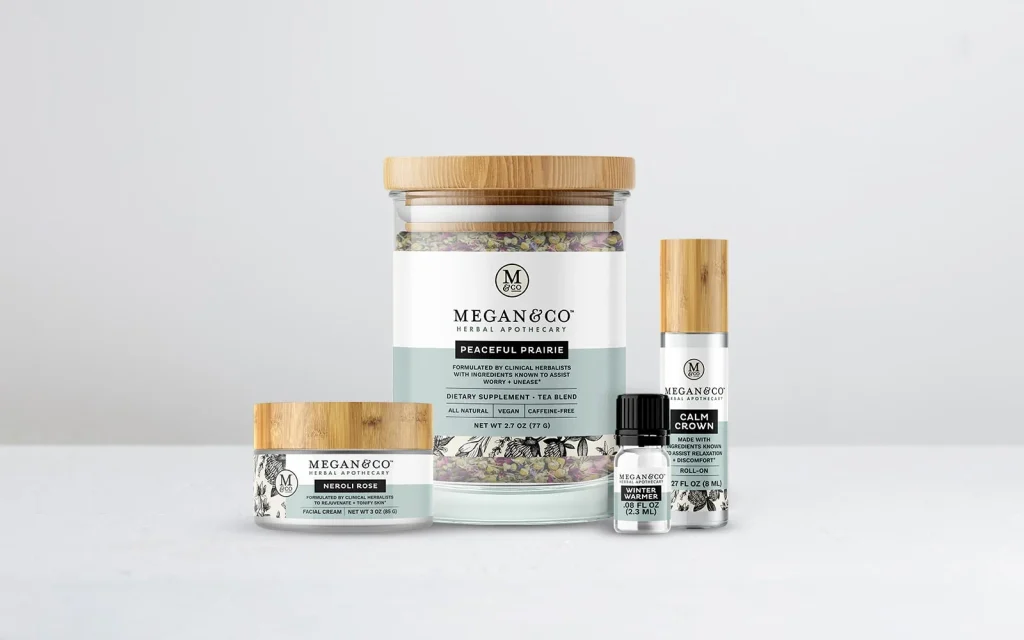
Our redesigned packaging reflected the level of quality and care that the brand committed to in their product production and created a warm, engaging experience for consumers.
And as the brand started focusing on a more high-end presentation, they also decided to scale back their product offering. Rather than trying to offer everything to everyone, they began focusing on their top 20% best-selling products, reducing their overhead and maximizing profits as they centered in on what their customers really needed.
On the Entrepreneurs Mind Speak podcast, the founder of Megan & Co The Herbal Apothecary discusses limiting her product offerings to her top-selling items.
It’s better to slow down and ensure that your products and branding are high-quality, consistent, and created to appeal to your target audience than to rush into production. You can always expand later down the line, but if your brand reputation suffers, you might struggle to recover in the long run.
Mistake #3: Chasing Trends
Understanding your competitors and your industry is important. But that doesn’t mean you should jump on every trend or sacrifice your own brand consistency or values. Never introduce a product just because your competitors are doing so or it feels trendy in the moment.
Every line extension should be deliberate and done with thoughtful consideration. Each product needs to align with your brand’s values and make sense for your audience.

Mistake #4: Failing to Consider Your Customers’ Preferences
You might come up with a product idea that makes sense to you, but if it doesn’t make sense to your customer base, it isn’t going to sell.
Before you introduce any new products, think about what your audience loves about your brand and what they might want in the future.
For example, if you are known for spicy, bold food products, you might not want to introduce a product with more subtle flavors. Or if your supplement brand has always committed to sustainability and eco-friendly values, introducing a product that isn’t ethically sourced could be a misstep.
Testing new products with your audience can provide valuable insight. For example, you can release new items as limited or seasonal releases to see how well they sell and appeal to your customer base.
When in doubt, reach out to your audience and ask questions. Poll them and see what they want and don’t want. You will never regret slowing down and taking time to consider your audience and their needs.
The 5-Step Line Extension Process
Now that you know what steps to avoid and different ways to potentially expand your product line, let’s talk about the step-by-step process.
Creating a successful product extension requires thoughtful planning and smart strategizing to avoid mistakes, appeal to your audience, and create the consistency you need to strengthen and grow your brand.
Step 1: Research and Analyze
You need to put the same level of thought into growing your business as you did when you started one. A smart expansion involves research and analysis.
First, you need to understand your existing customer base. Who is buying your products? If you haven’t already done so, you need to identify your primary purchasers, including their demographics, their pain points, and their desires.
Next, consider what is already working for this audience. Which of your existing products sell best? What benefits and features appeal to them? What else do they request? What problems remain unsolved for them? Customer feedback can offer some of the best insight for potential product extensions.
In this video, the owner of Megan & Co The Herbal Apothecary discusses how her customers have contributed to her decisions on which supplements and products to offer next.
Finally, research your competitors. What additional products are they offering? What could you create that they are not offering? What do their consumers appreciate about them?
These questions will help lead you to new product ideas as you expand your brand.
Step 2: Evaluate Your Options
Once you have generated ideas based on consumer and competitor research, it’s time to evaluate options and narrow them down.
Every line extension needs to make sense based on:
- Market demand
- Brand alignment
- Production feasibility
- Profit margins
- Competitive landscape
Make sure you understand why you are expanding and why you are specifically choosing your new product variation. If you can’t answer the question clearly, neither can your customers.
You also need to consider the financial impact of expanding your product line. There will be startup costs involved, just as there were when you launched your business. You need to be able to viably invest in a new product and market it strategically, without sacrificing quality or integrity in the process.
During this step, you also want to consider whether you will be selling your product at a new price point or the same as your existing ones.
Understanding Price Points: Horizontal vs. Vertical Line Extensions
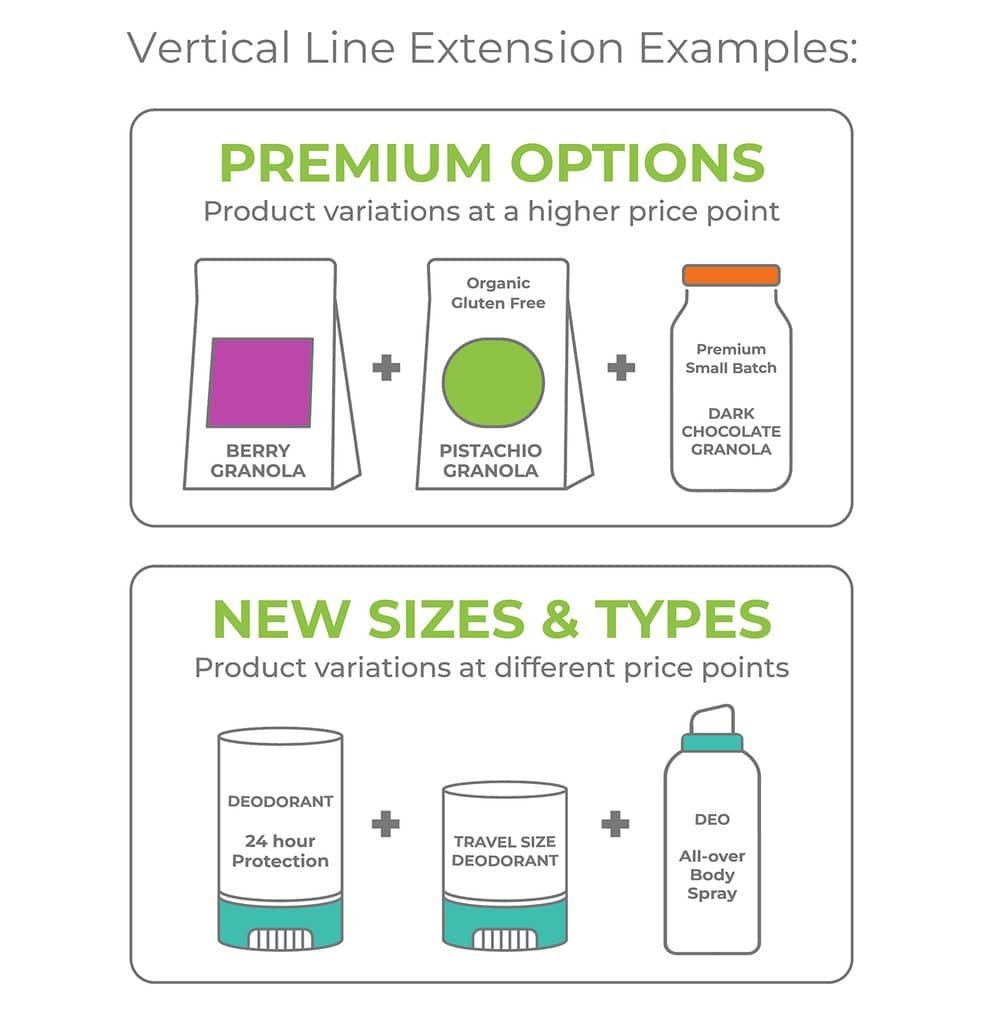
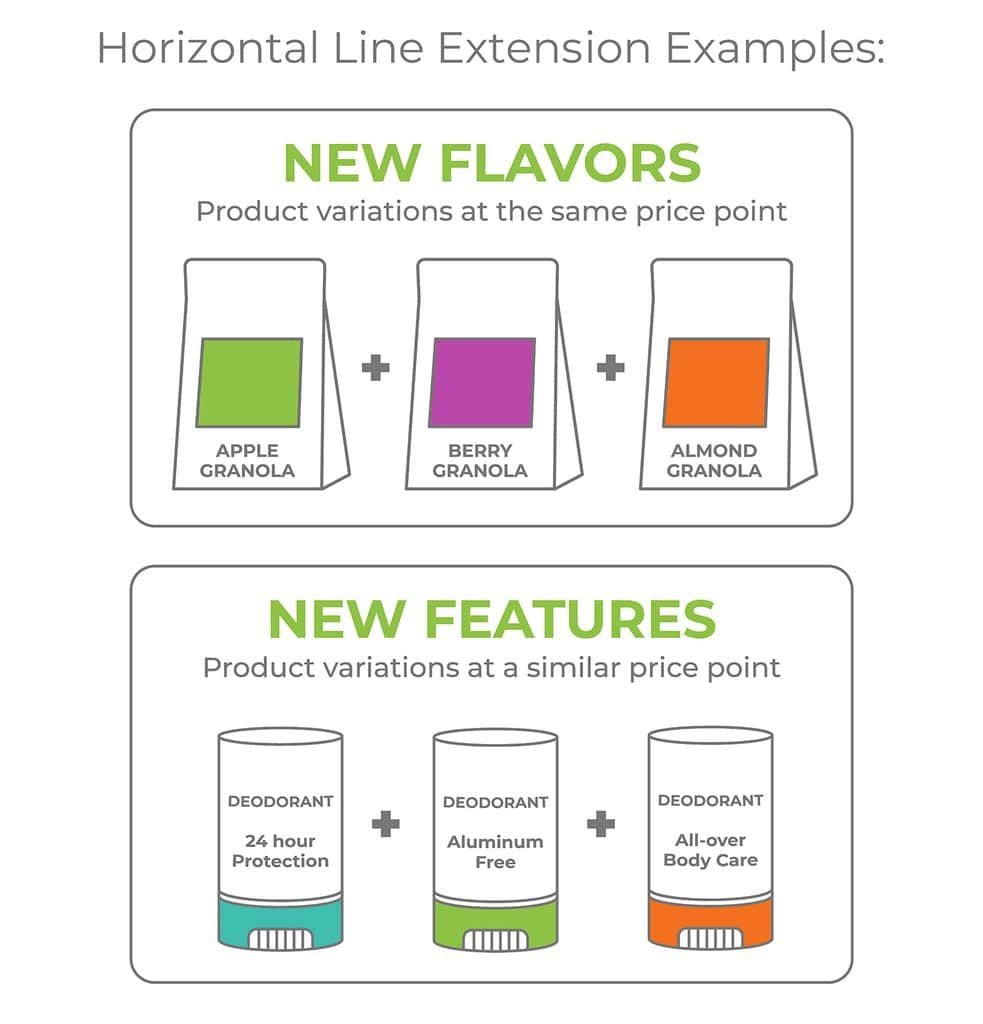
There are two types of line extensions—horizontal and vertical. Horizontal line extensions occur when you bring in a comparable product, such as a new flavor or a similar product, typically to be sold at the same price point.
Vertical line extensions, on the other hand, change the value tier of a product. You are either moving upward to a higher price point, creating a more premium or luxury version of a product, with better ingredients and an elevated experience, or moving downward to a lower price point, with a simplified formula or perhaps a smaller size.
For example, you might introduce a luxury serum version of a moisturizer, or a travel-size option of your hero product.
Both extension options can be valuable. However, with vertical line extensions, you need to be careful. Bringing in a more expensive product can potentially upset existing customers, while bringing in a less expensive one can dilute your brand. As long as you are clearly communicating the different features and why they are priced differently through your packaging, you can avoid alienating your audience.
Once you understand what you are offering, why you are offering it, and whether you will be introducing a different price point within your product line, you are ready to start expanding!
Step 3: Build a Scalable Packaging System
As you start to expand your product line, remember that you will likely continue to grow and scale in the future. You might want to continue with future line extensions, and perhaps even expand into different categories with brand extensions in the future.
While you don’t want to introduce too many products too fast, you do want to create room for future growth.
The packaging you choose now needs to accommodate potential additions in the future, such as:
- New flavors
- New scents
- New formulations
- New categories
You want to make sure that your design choices will make sense as your brand grows and expands.
Think about your color palette, overall brand aesthetic, and design elements. They might change for future product offerings, but they still need to be aligned if you plan to create more extensions within the same brand.
Ask yourself if you have future goals for expansion. How will new products and categories fit within your packaging system? Are there elements that will carry through for consistency? What will have to change for different product categories? What visual elements can you use across different categories?
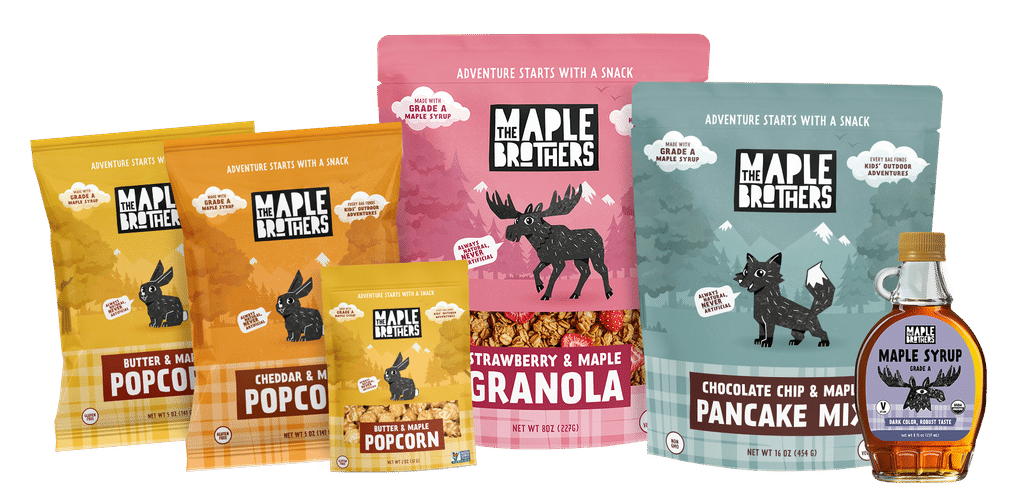
For example, Maple Brothers creates different snack product lines using maple syrup. Each product category features a unique animal image—a squirrel on each maple syrup package, a rabbit for popcorn, a moose for granola. These images connect product lines across flavors, create a consistent, recognizable brand element, and accommodate future growth—as the brand continues to expand, we can design different animals for future categories.
Tips that help accommodate future growth include:
- Designing clean, uncluttered packaging that allows you to easily highlight product differences
- Establishing a consistent color palette
- Determining your brand’s most important visual elements
The goal is to leave the door open for future extensions without needing to redesign your existing packaging later down the line.
Step 4: Differentiate (and Align) Your Products Strategically
As you consider what your packaging needs for long-term growth and potential future expansion, you also need to start thinking about what elements of your branding will maintain consistency across products and what techniques you will use to differentiate them.
Do you plan to feature a consistently placed and sized logo on each container while using color coding for variations? Will you create different product names within a consistent theme? Are there images or illustrations that will indicate different features, flavors, or benefits? If you use color coding, is there an overall color palette you will stick to?
Remember that you want a combination of consistent brand elements and product distinguishers, and each should be chosen for a reason. Maybe you maintain a logo, a catchy tagline, and an image that reflects your brand’s mission, but change colors or icons. Or perhaps you vary your products with fun packaging copy that reflects the differences.
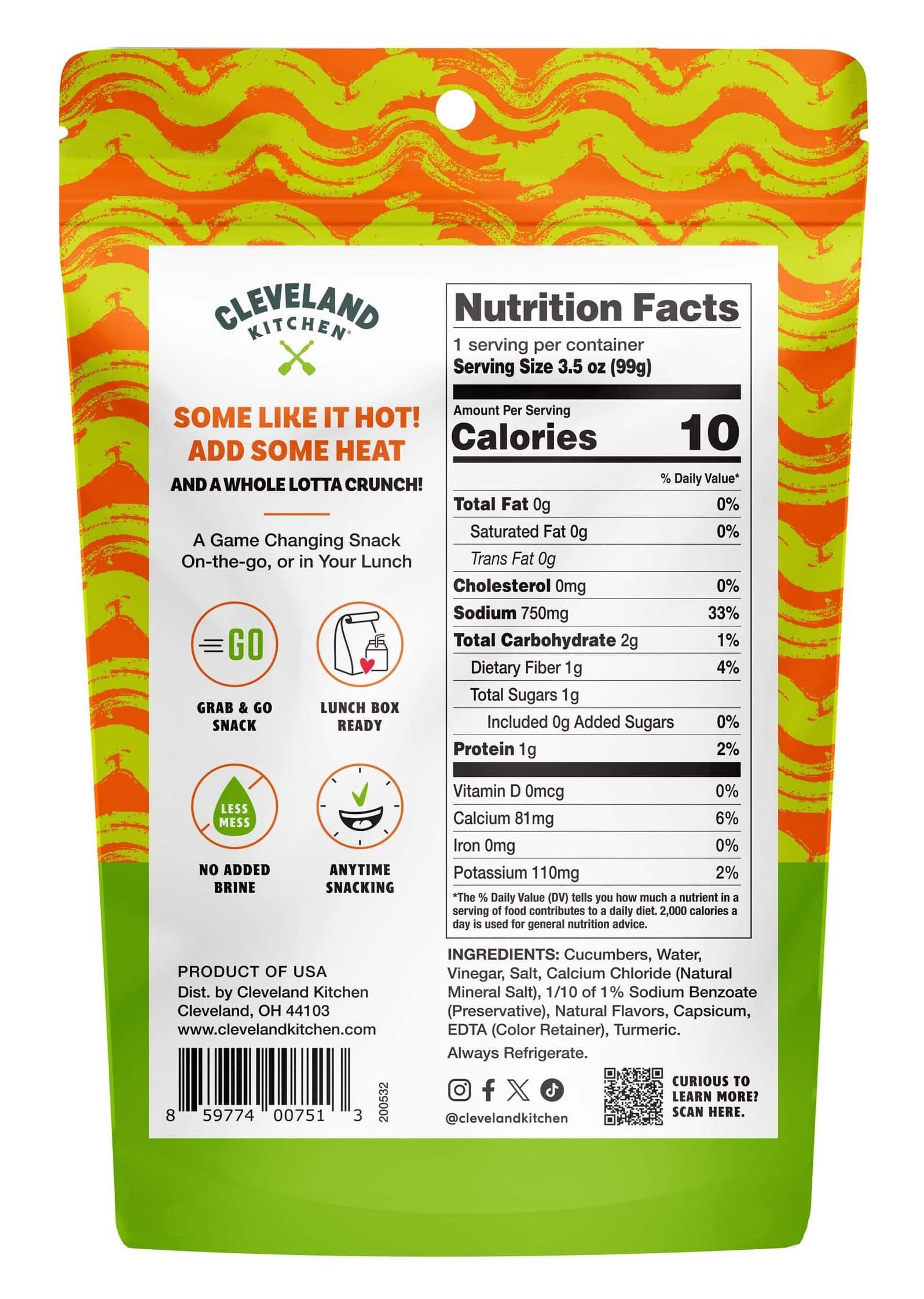
For Cleveland Kitchen’s on-the-go snack pickles, we created copy that communicated each flavor’s unique profile but aligned with the brand’s voice.
With careful planning and consideration, you can create a cohesive but distinct packaging system that speaks to customers, builds your brand image, and allows for future growth.
Step 5: Launch and Test
As you launch your product extension, remember that iteration and scaling are ongoing processes. You might not get everything right with the first version. Be prepared to test and adjust as needed—you might need to adjust packaging, alter flavors, or market your product differently.
Be sure to gather feedback on your newly launched product from:
- Existing customers
- Retail partners
- Sales data
- Reviews
- User-generated content
The information you gather will help you learn what adjustments you need to make and plan for future extensions.
Designing a Product Family That Sells
As you grow and expand your product line, remember that every decision you make needs to support your overall brand story.
Product extensions should never feel like one-off offerings or choices that don’t make sense. They should always be part of a strong system that supports your long-term goals.
Ultimately, your product line should feel like a family, working together to bring in new customers, build loyalty among existing ones, and contribute to who you are and what you represent as a brand.
Product Line Extension FAQ
A line extension is when a brand either offers a variation of an existing product or a comparable product within the same category, such as introducing a new flavor, scent, formulation, size, or benefit.
A line extension expands an existing product within the same category, typically meaning they are sold in the same aisle targeting a similar audience. A vitamin brand introducing a new supplement or a granola bar brand adding an additional flavor would be line extensions. A brand extension introduces a distinctly different product under the same brand name.
A brand is usually ready when the current product is generating consistent sales, customers are asking for additional options, production can feasibly scale, and the extension aligns with the overall brand image, values, and strategy.
Most start-ups or emerging brands benefit from introducing a small number of SKUs, often just one hero product, or a couple of variations. This gives the brand a chance to establish itself, gauge product success, and learn more about its customers before investing in additional product creation.
Every product should meet the needs and desires of your audience. Conduct competitor and customer research and learn what your audience is interested in. Make sure you have a clear purpose for introducing a new product.
It’s important for customers to be able to recognize your brand while still understanding what makes new products distinct. Packaging design can help you achieve this by creating a uniform brand look but varying products through colors, illustrations, or packaging copy.
Need Help Expanding Your Product Line?
At Crème de Mint, we help food, beverage, beauty, and supplement brands create strategic line extensions that feel cohesive, scalable, and retail-ready.
Our product line extension services may include:
- Packaging system development
- Flavor and SKU differentiation
- Retail-ready packaging with shelf appeal
- Brand guidelines for future growth
- Market research & competitive positioning
- Logo refresh
- Compliance updates
- Realistic 3D mockups
- Print-ready artwork
Whether you’re launching a new flavor, formulation, scent, or product category, we help ensure every package feels unmistakably part of your brand while giving customers a clear reason to try something new.